
The Q# Community TextMate Grammar Is Now Part of the QDK Extension
Back in 2022 I announced a new Q# community project - a proper, standalone TextMate grammar for Q#, built with a real build pipeline, test suite and multiple output formats, rather than the handful of regular expressions that the QDK extension shipped with at the time. It has quietly lived in the qsharp-community organization ever since.
Today I’m happy to report that the grammar has “graduated” - a snapshot of it is now officially vendored into the QDK extension itself, replacing the original hand-written grammar the extension used to ship with, and it already shipped in v1.31.
What's new in agent-framework-mlx: Tool Calling, Agent Framework 1.12.1 and more
Back in December I introduced the MLX Integration Library for Agent Framework, a small library that lets you plug local MLX models into Agent Framework applications as a regular chat client, sitting right next to your cloud-backed agents. Agent Framework has been moving quickly since then, and rather than letting the library drift behind, I spent some time catching up and, in the process, added one of the features people kept asking me about: tool calling.
PII guardrails for .NET applications - Part 2: Agent Framework agents
In part one of this little series I introduced TasmanianDevil, a standalone, offline PII detection and de-identification engine for .NET. We saw it on its own - detecting and validating PII, anonymizing it with a range of operators, the reversible encrypt/decrypt round-trip, structured JSON and CSV redaction, and the optional multilingual NER add-on.
That engine is useful anywhere, but the place I built it for is AI agents. In this part I will wire it into Microsoft Agent Framework (MAF) agents through AgentGuard, so PII is handled automatically around the agent - on the way in, on the way out, and in the results that come back from tool calls.
PII guardrails for .NET applications - Part 1: TasmanianDevil library
A few months ago I introduced AgentGuard, a library for declarative guardrails and safety controls for .NET AI agents. One of the rules it shipped with from day one was PII redaction, but back then it was a fairly basic, regex-only affair - good enough to scrub an email address or a credit card number, but not much more. Since then I have rebuilt that part of the library from the ground up into a proper, offline PII detection and de-identification engine, and it has grown enough that it no longer makes sense to keep it locked inside AgentGuard.
As of the 0.10.0 release, the PII engine lives in its own standalone, brand-neutral library called TasmanianDevil - framework-agnostic, no dependency on AgentGuard, usable anywhere you have a string you would rather not leak. AgentGuard now consumes it like any other NuGet package.
This is the first of a two-part series. In this part I will walk through TasmanianDevil on its own - detection, anonymization, the reversible round-trip, structured data, and the optional multilingual NER. In part two I will wire it into Microsoft Agent Framework (MAF) agents, where it really comes into its own.
Chain of Agents: Collaboration between local and remote language models with Agent Framework
This post continues a series on hybrid architectures that combine local Small Language Models (SLMs) with cloud Large Language Models (LLMs). We have already looked at the Minions pattern, which offloads bulk text extraction to a local model to reduce cloud API costs, and the SLM-default, LLM-fallback pattern, where a local model handles the majority of queries and only escalates to the cloud when confidence is low. Today we look at a third pattern: Chain of Agents (CoA), introduced in the paper “Chain of Agents: Large Language Models Collaborating on Long-Context Tasks” by Wang et al. (2024). Where the previous patterns were primarily motivated by cost, CoA is motivated by a different challenge - what happens when your document is simply too long to fit into any model’s context window?
Q# book samples now available in the notebook format
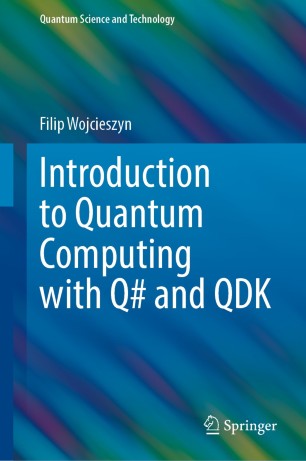
Some years (wow, time flies!) ago I wrote a quantum computing book titled “Introduction to Quantum Computing with Q# and QDK” (I guess it’s difficult to miss too, since its cover still sits in the sidebar of this blog…). Even though a ton of things have changed in QDK since than, I have been maintaining the source code throughout the years - most importantly, porting everything to QDK 1.0.
Today I would like to share yet another update: the samples are now also available as Jupyter notebooks.
Introducing AgentGuard - declarative guardrails for .NET AI agents
As AI agents become more common in .NET applications, the question of how to keep them safe and well-behaved keeps coming up. Prompt injection, PII leakage, topic drift, tool call abuse - these are all problems that every team building with agents ends up having to deal with, often by hand-rolling ad-hoc checks. Python developers have had libraries like NeMo Guardrails and Guardrails AI to help with this for a while now, but the .NET side has been largely left to fend for itself.
Today I would like to introduce AgentGuard, a library I have been working on to fill that gap - composable, declarative guardrails and safety controls for .NET AI agents.
Pure Post Quantum Cryptography TLS with ASP.NET Core
Over the last few years, I have dedicated a lot of space on this blog to the topic of Post-Quantum Cryptography (PQC). Today, we will peek into the TLS 1.3 handshake.
While hybrid mode TLS is the pragmatic choice for today’s internet, understanding how to construct a fully quantum-safe connection is critical for preparing for the deprecation of classical algorithms.
In this post, we are going to explore a “pure” PQC TLS stack: Post-Quantum Key Exchange, with Post-Quantum Authentication. We will configure an ASP.NET Core application running on Linux to use ML-DSA-65 for authentication and ML-KEM-768 for key exchange.
Fine-tuning Phi-4 with Azure ML
Recently, I dedicated quite a lot of room on this blog to the topic of running Phi locally. This time, I want to focus on a different aspect of adopting small language models like Phi - fine-tuning them. I already covered local fine-tuning in the past, so today we are going to do this with Azure Machine Learning (Azure ML).
Azure ML is a comprehensive cloud service for accelerating and managing the machine learning project lifecycle. While local fine-tuning is great, moving to Azure ML makes a lot of sense when you need to scale, and/or when you want to experience the Nvidia GPUs without investing in hardware.
We are going to do LoRA fine-tuning of a Phi-4 model, and then deploy it to a managed batch endpoint for inference.
(Maybe) LibOQS.NET 0.3.0: with liboqs 0.15.0, full suite of algorithms and other new features
Following the initial introduction of (Maybe) LibOQS.NET a few months ago, the post-quantum cryptography landscape has continued to move rapidly. To keep pace with these developments, the library has undergone significant updates to provide broader algorithm support and deeper integration with the underlying native tooling.
Today marks the release of version 0.3.0, a major milestone that brings the wrapper up to date with liboqs 0.15.0. This release is more than just a version bump; it exposes pretty much all of the liboqs algorithms to .NET developers and adds support for signature context strings, as well as the ability to perform deterministic (derandomized) KEM operations.
About

Hi! I'm Filip W., a software architect from Zürich 🇨🇭. I like Toronto Maple Leafs 🇨🇦, Rancid and quantum computing. Oh, and I love the Lowlands 🏴.
You can find me on Github, on Mastodon and on Bluesky.

Recent Posts
- 2026/08/25, The Q# Community TextMate Grammar Is Now Part of the QDK Extension
- 2026/07/30, What's new in agent-framework-mlx: Tool Calling, Agent Framework 1.12.1 and more
- 2026/06/26, PII guardrails for .NET applications - Part 2: Agent Framework agents
- 2026/06/26, PII guardrails for .NET applications - Part 1: TasmanianDevil library
- 2026/05/21, Chain of Agents: Collaboration between local and remote language models with Agent Framework
Categories
- agent-framework (6)
- ai (35)
- ai agents (5)
- ai search (5)
- apache cordova (1)
- architecture (1)
- asp.net 5 (17)
- asp.net core (48)
- asp.net mvc (35)
- asp.net mvc 6 (7)
- asp.net vnext (6)
- asp.net web api (96)
- astronomy (1)
- autogen (1)
- azure (26)
- azure service bus (1)
- azure-devops (1)
- azure-ml (1)
- benchmark dotnet (1)
- bing maps (1)
- blazor (2)
- c plus (2)
- c-sharp (160)
- cryptography (9)
- csharp (6)
- csharp 10 (2)
- dnx (3)
- dotnet-cli (2)
- dotnet-script (12)
- duende (4)
- editorconfig (1)
- entity framework (2)
- espn api (2)
- events (1)
- ffi (4)
- fsharp (1)
- git (1)
- glimpse (1)
- html5 (4)
- identity server (2)
- iis (2)
- il (1)
- intro to qc (19)
- ios (7)
- javascript (9)
- jquery (4)
- jquery mobile metro (1)
- katana (2)
- kindle (1)
- knockout.js (8)
- kotlin (2)
- last.fm api (2)
- linq (1)
- mac (3)
- macos (1)
- mathematica (1)
- mlx (7)
- msbuild (3)
- mvc core (3)
- nancy (2)
- native (1)
- net (148)
- net 5 (3)
- net 6 (5)
- net 7 (7)
- net 8 (3)
- net 9 (1)
- net core (49)
- net sdk (2)
- ninject (2)
- odata (4)
- oidc (2)
- omnisharp (13)
- openai (12)
- osx (2)
- owin (5)
- phi (13)
- php (1)
- pqc (8)
- promptflow (1)
- python (3)
- q-sharp (42)
- qir (3)
- qiskit (1)
- quantum computing (50)
- rag (1)
- roslyn (30)
- rust (6)
- scriptcs (11)
- scripting (9)
- security (16)
- semantic-kernel (2)
- servicestack (2)
- signalr (8)
- swift (9)
- testing (5)
- twitter boostrap (1)
- typescript (1)
- visual studio (4)
- visual studio code (11)
- wasi (3)
- wasm (3)
- windows (2)
- windows phone 7 (1)
- wordpress (1)
- wpf (2)